

Why application development on AI designers is not suitable for commercial projects
Table of contents
 05-09-26Read Time: 11 min
AI application builders are gaining popularity because they simplify mobile development as much as possible. Artificial intelligence generates the structure, interface, and program code – at first glance, this seems like a profitable alternative to traditional development. But in fact, a high-quality mobile application is much more than a set of screens and basic functions. For business, wide custom functionality, stability, data security, high performance, system integrations, and scalability are important. The capabilities of AI designers in this regard are very limited. Why artificial intelligence is not able to create a full-fledged commercial product for business tasks – we will consider in the article.
What are AI mobile app builders?
AI-designers are services that use artificial intelligence to automate the development of software products. The user describes the desired functionality in plain language – AI analyzes the request and automatically forms the structure, creates screens, design, program code, logic, etc. In fact, you can create a mobile application with minimal developer involvement without knowledge of programming languages, frameworks, design programs. AI-designers work on the principles of no-code or low-code:
- No-code involves creating an application without writing any code. The functionality is formed from ready-made blocks and text commands – this is convenient for quickly creating simple solutions without special knowledge.
- Low-code provides more opportunities for customization – the developer can use a certain amount of code to implement more complex scenarios, but this requires technical skills.
AI-designers are suitable for tasks that do not require complex architecture and a high level of customization. AI can be used to quickly create an application prototype, a simple MVP version, and test scenarios. But the capabilities of AI-designers are critically lacking when you need to create a real commercial product with thousands of users, payments, a large database, unique design, complex integrations, constant development, and scaling.

Limitations and disadvantages of AI designers for commercial applications
Limited customization options
AI designers have very limited opportunities to adapt the application to commercial tasks and business needs. Such platforms work on the basis of ready-made components, so the developer cannot implement functionality outside the framework of template solutions. A commercial application requires individual calculation rules, complex order scenarios, personalized offers, non-standard loyalty systems, etc. The designer operates only with typical tools. The limitations also apply to design – ready-made components allow you to quickly create an attractive interface, but it is difficult to accurately implement a unique brand design system, specific UX and navigation. For a small MVP, this may be acceptable, but for a long-term commercial product, such dependence significantly limits development opportunities. AI can lay down incorrect or incomplete scenarios, especially in free trial products – this creates additional uncertainty and chaos, which forces customers to turn to freelancers to finalize the project.
Scaling issues
At the launch stage, the application on the AI-designer can work at normal speed. But the situation changes when the number of users and the volume of data begins to grow – the number of simultaneous requests to the server, database operations, authorizations, payments, API requests increases. If the AI-platform is not designed for such a load, users encounter slow operation and the unavailability of some functions. Therefore, a commercial application must be designed taking into account the future load, and not only the basic initial needs. Even if the AI-designer uses Cloud infrastructure, its capabilities are often limited by the tariff and platform settings. Full-fledged deployment of the infrastructure does not occur automatically – this still requires the participation of the developer. Without such control, the business depends on the existing infrastructure of the designer and its technical limitations. Professional mobile development always takes into account the prospect of growth – opportunities for scaling, database optimization, load distribution, caching, and component modernization are created.
Insufficient integration capabilities
Commercial applications interact with third-party services and programs – CRM, ERP, payment systems, delivery services, website, analytics tools, social networks, etc. AI-designers have some ready-made integrations with popular services for typical scenarios. But if a business uses a specific combination of API integrations, then this becomes an overwhelming task for AI platforms. Problems are especially noticeable if you need to configure data exchange between several systems at the same time. For example, information about an order must be transferred from a mobile application to CRM, then to accounting, delivery and payment systems, and then back to the application. Such processes require flexible API operation, which is impossible for AI-designers.
Security
Security is of great importance for commercial applications that work with personal information, financial transactions, payment data. It is important to understand where exactly the data is stored, how it is transferred between system components, who has access and what protection mechanisms are implemented. When using a designer, a significant part of the control passes to the AI platform – the business becomes dependent on a third-party service on which the application is created. It is impossible to fully control access to data, configure your own protection mechanisms and conduct a detailed security audit. In addition, security risks are associated with automatic code generation: artificial intelligence often gives incorrect solutions that can weaken data protection mechanisms.
Platform dependency
Using an AI-constructor creates a dependency on the platform on which the application is developed. At first glance, this is not critical – the business uses ready-made infrastructure and pays a tariff that is significantly lower than custom mobile development. However, over time, the project accumulates data, integrations, users, and functionality – the dependency on a specific platform grows rapidly. The service can behave unexpectedly – update tariff plans, increase the cost, change the terms of use, limit certain functionality, or even cease to exist. It is quite difficult to transfer an application from such a platform, which only increases the dangerous dependency. In addition, constructors do not provide a full-fledged process of publishing an application in the App Store and Google Play. At this stage, it is still necessary to involve developers with experience working with Apple and Google sites.
Performance issues
AI-constructors allow you to quickly create a mobile product, but an automatically generated solution almost always loses in performance. Unnecessary operations, inefficient work with data, excessive server load, incorrect integrations – all this slows down the application and worsens the user experience. The application processes requests longer, works worse under heavy load. The problem is exacerbated if the number of users, the volume of data and the complexity of integrations increase. For a commercial product, these are risks of audience churn, deterioration of reputation in the market, and reduced business profitability.
Difficulty of technical support
After the release, it is necessary to constantly maintain the smooth operation of the application – fix bugs, update functionality, adapt the product to new versions of Android and iOS, monitor security and respond to user feedback. The functionality is gradually expanding – new payment methods, integrations, loyalty programs, personalization, analytics, etc. are added. If the application is created on an AI-constructor, technical support is provided exclusively through the development platform – so the business is completely dependent on this service. Each subsequent revision, scaling, improvement becomes more difficult or even impossible. Therefore, when choosing a technology, it is necessary to evaluate not only the speed of creating the first version, but also the prospects for support and development over the next years.
Unpredictable AI errors
Artificial intelligence is able to quickly generate code, but no one can guarantee the correctness of solutions. AI can misunderstand the task, suggest an unsuccessful architecture, or create unreadable code that cannot be edited. Outwardly, the generated functionality may look completely working. Errors appear later – when the application starts to work fully under real loads. Relying on a designer without the participation of a qualified developer is dangerous – an experienced specialist should check the code, architecture, logic, security, and interaction of components. Artificial intelligence can speed up writing individual code fragments, finding errors, and performing some routine tasks, but the ultimate responsibility for the quality of the product should remain with specialists. Therefore, AI can be only one of the tools in the hands of professionals, and not a full-fledged replacement for the development team.
The real price of mobile development on AI-constructors
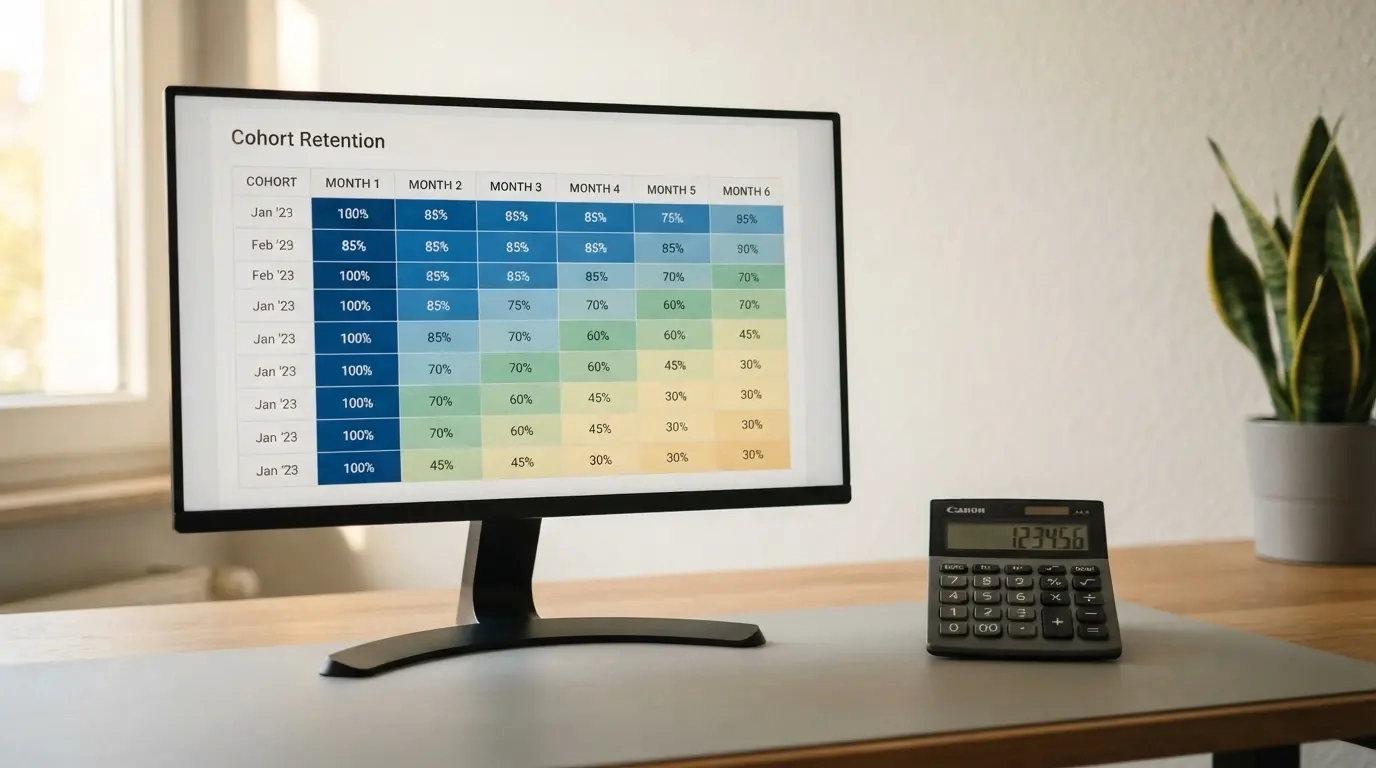
At the start, the AI-constructor really reduces the price of the application. You don’t need to pay for a full cycle of professional development, and you can get the basic version in the shortest possible time. But an inexpensive product from the constructor does not guarantee savings in the future and can lead to double costs and rewriting the application. You need to evaluate the investment throughout the entire product life cycle:
- Automatically generated code may contain errors that are not noticeable during the first testing. Unstable application operation means lost customers, reduced profits, and weakened competitive advantages. The company saves on development, but loses its reputation, stable sales, and audience trust.
- A free or inexpensive plan has limitations on the number of users, data volume, integrations, and functionality. As the application develops and scales, the plan becomes more expensive – this is worth considering at the start.
- Over time, the application may become “crowded” on the AI-designer platform – there is not enough functionality, security, stability, performance. Often in such situations there is no other way out than to order a completely new application. Then the costs for the initial AI-version turn out to be useless.
- Once launched, you need to constantly update the application, fix bugs, maintain integrations, and increase capacity as the number of users grows. With limited designer capabilities, technical work becomes more difficult and expensive.
Can AI be used in professional development?
The right combination of AI with professional development provides advantages – artificial intelligence takes over some of the routine work, and the team controls the architecture, code, security, performance and other decisions. The application launches faster, but it can be fully scaled, maintained and developed. How to properly use artificial intelligence in mobile development:
- AI as a developer tool. AI cannot independently determine the architecture and logic of a commercial application. Developers control technical solutions, verify the result, and are responsible for the quality of the product. AI is used as an additional tool that speeds up the team’s work.
- Generation of individual components and code. Artificial intelligence can create individual fragments of code, design, and functionality. The developer checks the result, adapts it to the project, and refines it manually if necessary.
- Automate routine tasks. AI helps process typical queries, create template code, work with data, and perform repetitive operations that require painstaking manual labor. The team can focus on complex tasks by delegating routine tasks to artificial intelligence.
- Testing and bug finding. AI is used to analyze the code, find problem areas and suggest fixes. But the final verification is left to the developer and testers.
Why professional development is better than an AI designer
AI-designers benefit from the speed of launch and initial cost. With artificial intelligence, you can create a prototype, a simple application or at most a PoC version (Proof of Concept) for presentation to investors, testing one hypothesis of the product, etc. But a low price at the start does not mean that such an option will be profitable in the long term. During product development, costs for refinement, bug fixes, new features appear. Additional inconveniences and financial losses are created by dependence on the platform in terms of security, scalability, technical support. Errors associated with incorrect code writing by artificial intelligence manifest themselves. As a result, a mobile application on an AI-designer turns into a source of problems and unnecessary expenses without the possibility of product refinement.
Professional development takes more time, but allows you to create an application exactly for business tasks. Developers have full control over the design, functionality, architecture, and code. They can optimize performance, implement complex integrations, synchronize the application with any external services, and configure correct user scenarios. Professional development removes scaling restrictions, provides full data protection, and provides high-quality and affordable technical support. So if the application is an important part of a commercial business, professional development provides much more opportunities for control, scaling, and product development.
If you are choosing between an AI designer and professional mobile development, contact our company KitApp for advice. Leave a request via the form on the website – we will offer a high-quality and most profitable solution for your tasks.


